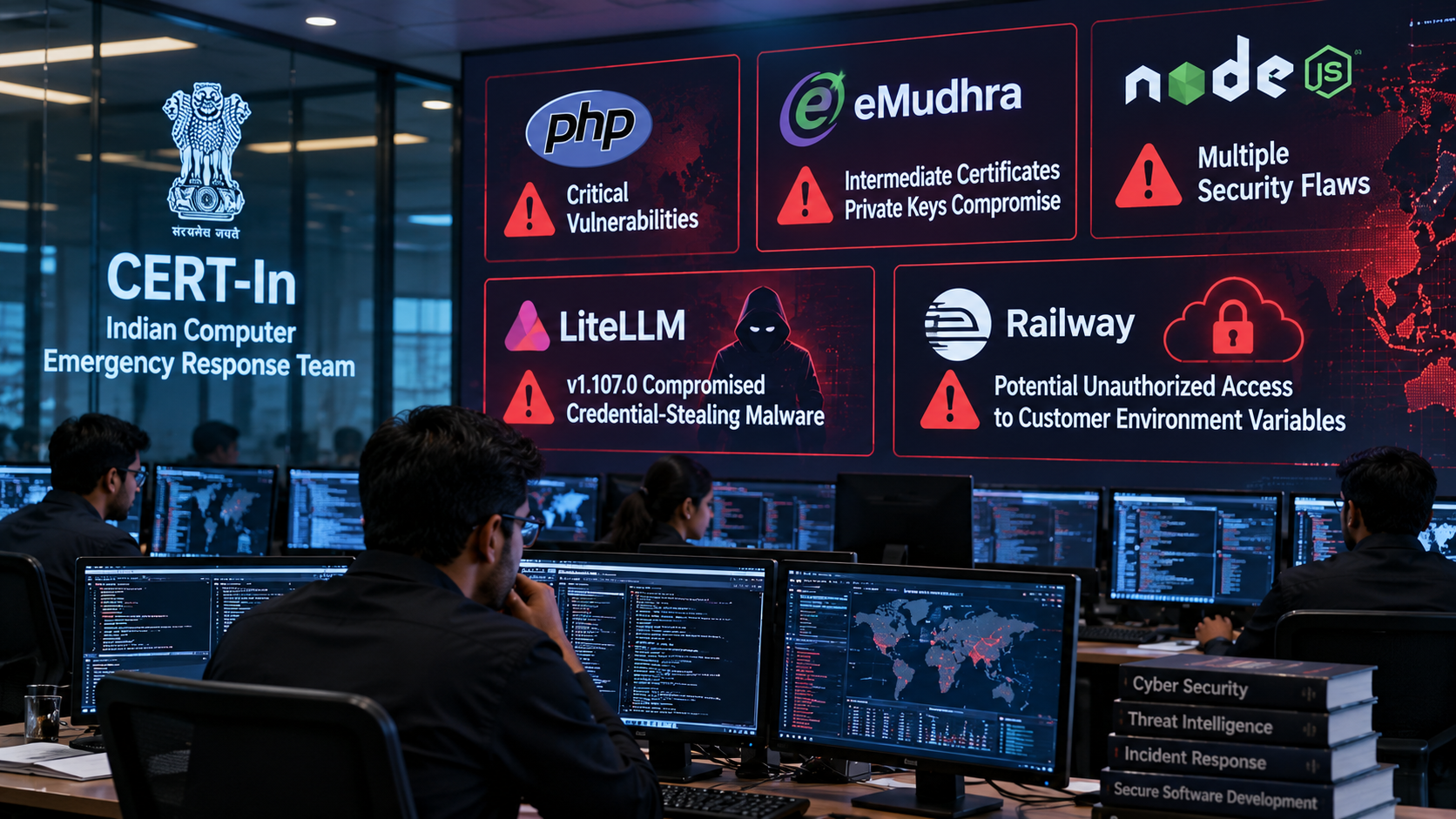
दुनियाभर के साइबर सिक्योरिटी सिस्टम के लिए पिछले 24 घंटे बेहद महत्वपूर्ण रहे हैं। एक के बाद एक कई अलग-अलग security vulnerabilities और incidents सामने आए हैं, जिनका असर वेबसाइटों, सर्वर, डिजिटल सर्टिफिकेट, AI applications, cloud infrastructure और developer environments तक पहुंच सकता है।
भारत की साइबर सुरक्षा एजेंसी CERT-In ने PHP की दो critical vulnerabilities को लेकर चेतावनी जारी की है। इसी दौरान भारतीय डिजिटल certification कंपनी eMudhra से जुड़े intermediate certificates के compromise का मामला सामने आया। दूसरी ओर Node.js ने कई security vulnerabilities को ठीक करने के लिए नए versions जारी किए हैं।
AI infrastructure में इस्तेमाल होने वाले LiteLLM के एक malicious software release ने supply-chain security को लेकर गंभीर चिंता पैदा कर दी है, जबकि cloud platform Railway ने भी customer environment variables तक अनधिकृत पहुंच की आशंका जताई है।
हालांकि इन सभी घटनाओं को जोड़कर एक ही coordinated cyberattack बताने का फिलहाल कोई आधार नहीं है। उपलब्ध जानकारी के अनुसार ये अलग-अलग security incidents और vulnerabilities हैं।
PHP में दो Critical Vulnerabilities, Remote Code Execution का खतरा
सबसे गंभीर alerts में से एक PHP को लेकर है। CERT-In ने 21 अक्टूबर को PHP में दो critical vulnerabilities—CVE-2026-109618 और CVE-2026-109619—को लेकर चेतावनी जारी की।
CERT-In के मुताबिक प्रभावित PHP versions में memory corruption और resource-control से जुड़ी कमजोरियां हैं। अगर किसी vulnerable system को specially crafted request के जरिए सफलतापूर्वक exploit किया जाता है, तो attacker remote code execute कर सकता है और सिस्टम को compromise करने की स्थिति पैदा हो सकती है।
प्रभावित versions में PHP 8.5.12 से पहले के 8.5 releases, 8.4.27 से पहले के 8.4 releases, 8.3.36 से पहले के 8.3 releases और 8.2.35 से पहले के 8.2 releases शामिल हैं।
CERT-In ने organizations और individual users को security updates लागू करने की सलाह दी है।
eMudhra मामले ने Digital Certificates की सुरक्षा पर उठाए सवाल
दूसरा बड़ा मामला भारतीय digital certification provider eMudhra से जुड़ा है।
CERT-In के अनुसार eMudhra के आठ intermediate CA certificates से जुड़े private keys में cryptographic randomness की समस्या सामने आई। कमजोर keys को recover किया जा सकने की संभावना के कारण browser और security vendors ने प्रभावित certificates को block या distrust करने की कार्रवाई की।
यह मामला इसलिए महत्वपूर्ण है क्योंकि digital certificates का इस्तेमाल websites और online communications की पहचान और encryption trust स्थापित करने के लिए किया जाता है।
अगर compromised private key का दुरुपयोग किया जाए तो attacker fraudulent TLS certificate जारी करने की कोशिश कर सकता है। इससे legitimate website की impersonation या encrypted communication को intercept करने का खतरा पैदा हो सकता है।
हालांकि एक अहम बात यह भी है कि CERT-In के अनुसार eMudhra की domestic Indian Digital Signature Certificate और eSign infrastructure इस incident से प्रभावित नहीं हुई। eMudhra ने यह भी बताया कि प्रभावित intermediate CAs ने end-entity certificates जारी नहीं किए थे।
Google और Mozilla ने भी उठाए सुरक्षा कदम
eMudhra मामले के बाद browser ecosystem ने भी action लिया है।
CERT-In के अनुसार Mozilla ने प्रभावित TLS intermediate certificates को block किया, जबकि Google ने Chrome में संबंधित public keys को block करने के लिए protection deploy की। Google ने प्रभावित trust chain से जुड़े root certificate को Chrome Root Store से हटाने की प्रक्रिया भी शुरू की है।
इसका मतलब यह है कि affected certificate chains पर निर्भर websites और services को compatibility और trust issues का सामना करना पड़ सकता है। इसलिए organizations को अपने certificate dependencies की समीक्षा करने और जरूरत पड़ने पर unaffected certificate authority से replacement certificates लेने की सलाह दी गई है।
Node.js ने भी जारी किया Security Update
इसी बीच लोकप्रिय JavaScript runtime Node.js ने 21 अक्टूबर को अपने 26.x, 24.x और 22.x release lines के लिए security updates जारी किए।
नए releases में कई vulnerabilities और dependencies से जुड़े fixes शामिल हैं। इनमें CVE-2026-105482, जो NUL character वाले DNS names से जुड़ा है, और CVE-2026-105483, जो TLS certificate hostname verification से संबंधित है, शामिल हैं। दोनों को high severity के रूप में सूचीबद्ध किया गया है।
Node.js ने संबंधित versions में eMudhra intermediate CA compromise से जुड़े certificate updates भी शामिल किए हैं।
नए versions में Node.js 22.23.4, 24.22.1 और 26.12.1 शामिल हैं।
AI Platform LiteLLM का Release Pipeline हुआ Compromise
साइबर सिक्योरिटी का सबसे चिंताजनक हिस्सा AI ecosystem से जुड़ा है।
Open-source AI gateway platform LiteLLM ने बताया कि 21 अक्टूबर को उसकी release pipeline compromise हो गई और malicious LiteLLM v1.107.0 को PyPI तथा container registries पर publish कर दिया गया।
LiteLLM के मुताबिक compromised version में ऐसा malware मौजूद था जो credentials चुरा सकता था और remote-code execution tools load कर सकता था।
यह release कुछ समय के लिए PyPI और Docker/GHCR repositories में उपलब्ध रहा। LiteLLM ने प्रभावित artifacts को हटा दिया है और कहा है कि पुराने versions सुरक्षित हैं। उसका latest safe version 1.106.2 बताया गया है।
तीन Developer Accounts के Credentials का इस्तेमाल
LiteLLM की जांच में सामने आया कि attackers ने तीन developer GitHub credentials का इस्तेमाल करके release pipeline में बदलाव किए।
इसके बाद malicious release को official distribution channels तक पहुंचाया गया। कंपनी ने involved tokens revoke किए और GitHub organization में access को अस्थायी रूप से सीमित किया।
यह घटना software supply-chain security के लिए बेहद अहम है क्योंकि यहां सीधे किसी user application को hack करने के बजाय trusted software distribution process को target किया गया।
यानी कोई developer अगर compromised release को सामान्य package की तरह install कर ले, तो खतरा उसके अपने infrastructure और credentials तक पहुंच सकता है।
Railway में Customer Environment Variables को लेकर चिंता
Cloud platform Railway से जुड़ा मामला भी security teams के लिए महत्वपूर्ण है।
Railway ने बताया कि एक unauthorized party ने customer environment variables वाले systems तक पहुंच बनाई हो सकती है। इन variables में API keys, database passwords और private registry credentials जैसी संवेदनशील जानकारी हो सकती है।
घटना के बाद customers को अपने stored secrets और credentials को rotate करने की सलाह दी गई है।
Railway ने security response के दौरान कुछ credentials को reset करने और platform operations पर अस्थायी प्रतिबंध लगाने जैसे कदम भी उठाए।
एक साथ इतने Alerts क्यों महत्वपूर्ण हैं?
इन घटनाओं में सबसे बड़ा common factor यह है कि खतरा केवल traditional hacking तक सीमित नहीं रहा।
आज security risk कई layers में मौजूद है:
PHP जैसी widely used web technology में remote code execution vulnerability।
Digital certificates में trust-chain compromise।
Node.js जैसे runtime में security flaws।
AI software supply chain में malicious package।
Cloud platforms में customer secrets तक संभावित exposure।
इसका मतलब है कि किसी organization को सिर्फ firewall या antivirus पर निर्भर रहना पर्याप्त नहीं है। Software dependencies, certificates, cloud credentials और developer accounts सभी को लगातार monitor करना जरूरी हो गया है।
कंपनियों और Developers के लिए क्या जरूरी है?
Security experts और संबंधित vendors की advisories को देखते हुए organizations को सबसे पहले अपने affected software versions की पहचान करनी चाहिए।
PHP users को supported patched release पर upgrade करना चाहिए। Node.js applications को भी latest security release पर ले जाना जरूरी है। eMudhra-related certificates इस्तेमाल करने वाले administrators को अपने certificate chains और trust stores की समीक्षा करनी चाहिए।
LiteLLM का affected 1.107.0 इस्तेमाल करने वाले users के लिए मामला और गंभीर है। LiteLLM ने प्रभावित environment को potentially compromised मानने और credentials rotate करने की सलाह दी है। केवल package को downgrade कर देना पर्याप्त नहीं माना जाना चाहिए, क्योंकि compromised environment में malicious components पहले ही credentials access कर चुके हो सकते हैं।
आम इंटरनेट यूजर्स को कितना खतरा?
इन alerts का बड़ा हिस्सा सीधे सामान्य smartphone users के बजाय developers, website administrators, companies और IT infrastructure operators से संबंधित है।
फिर भी इसका indirect असर आम users पर पड़ सकता है। अगर कोई vulnerable website compromise होती है या fraudulent certificate का इस्तेमाल किया जाता है, तो users की login information और sensitive data खतरे में पड़ सकते हैं।
इसलिए users को browser और operating system updates को ignore नहीं करना चाहिए और security warnings को bypass करने से बचना चाहिए। CERT-In ने भी affected certificate chains की validation और trust-store updates पर जोर दिया है।
फिलहाल सबसे बड़ा संदेश—Patch, Rotate और Verify
इन घटनाओं के बीच cybersecurity teams के लिए तीन शब्द सबसे महत्वपूर्ण हो गए हैं—Patch, Rotate और Verify।
पहला, vulnerable software को तुरंत patch करें। दूसरा, अगर किसी compromised platform या package के संपर्क में credentials रहे हैं तो secrets और passwords rotate करें। तीसरा, यह verify करें कि patched version वास्तव में production environment में चल रहा है और compromised certificates या packages अभी भी कहीं इस्तेमाल नहीं हो रहे।
क्योंकि केवल software update कर देना हमेशा पर्याप्त नहीं होता—अगर attacker पहले ही credentials हासिल कर चुका है तो उन credentials को बदलना भी जरूरी हो सकता है।
आने वाले दिनों में और खुलासे संभव
PHP, eMudhra, LiteLLM और Railway से जुड़े मामलों की जांच और remediation अभी जारी है। खासकर supply-chain compromise और cloud credentials exposure जैसे मामलों में organizations को incident response और forensic monitoring जारी रखने की जरूरत होगी।
इस पूरे घटनाक्रम ने एक बार फिर दिखाया है कि एक छोटी software dependency, कमजोर certificate key या compromised developer credential भी बड़े digital infrastructure के लिए गंभीर जोखिम पैदा कर सकता है।
फिलहाल उपलब्ध जानकारी के आधार पर इन घटनाओं को एक संयुक्त वैश्विक cyberattack कहना सही नहीं है। लेकिन एक ही समय में इतने महत्वपूर्ण security alerts का सामने आना निश्चित रूप से organizations के लिए high-alert situation है।